


Removing Rust From Fire Pits: Everything You Need To Know
Jan 22, 2024
Leave a message
Corten Steel BBQ Fire Pit
How to Remove Rust from a Fire Pit
We know the problem - after a long, cold winter, the weather is starting to turn and the days are finally getting longer. You've decided to take out your old fire pit and reuse it.
The only perfect combination for rust is bad weather and its old age!
However, that doesn't mean you have to go out and buy a new fire pit. Removing rust and restoring your fire pit to its former glory is not difficult.
Let us explain exactly how to remove rust from a fire pit ......
Outdoor Large Corten Steel Firepit
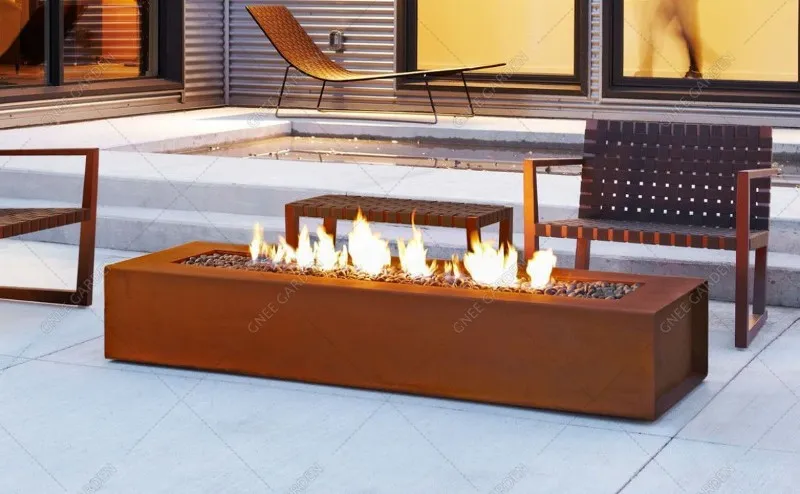
What is rust?
Rust is basically iron oxide. Iron oxide forms when iron is exposed to oxygen and water.
If left untreated, rust can wreak havoc and even leave holes in fire pits, making them unsafe and useless.
What are the different types of rust?
There are actually four different types of rust that we need to be aware of. The differences may not be immediately apparent to the untrained eye, but knowing which type of rust you're dealing with is important in understanding how to fix it.
Stabilizing Rust: Stabilizing rust is usually good and is intentionally used to protect the metal from further corrosion. You'll see this in industrial design, which is an increasingly popular aesthetic. For example, if your fire pit is made of weathering steel, the rust on it will be a stabilized rust and should be retained. We have a great article on weathering steel fire pits; these are our metal of choice for wood burning fire pits.
Flash Rust Usually occurs in specific locations where there is prolonged contact with water, such as a small pool of water at the bottom of a fire pit. It is usually bright orange in color and can form quickly if you are not careful.
Flaking Rust Often found on seams that are not fully covered by layers of paint. It is easiest to recognize because it takes up more volume than the original metal underneath.
Pitting Usually forms as a result of moisture retention and is often found on furniture or metal tools that have areas of cavities where moisture can enter.
Contemporary Outdoor Heat Fire Pit

Removing Rust from a Fire Pit
Now let's look at the good stuff - how to remove rust. There are two main types of rust removal:
1. using chemical removal products
2. using natural methods
Using Removal Products
When using a removal product, it is important to take the time to prepare yourself to ensure your safety.
You should read the instructions that come with the product for exact instructions on how to use it, but here is a general overview:
- You want to work in a well-ventilated area, away from any areas damaged by runoff. Outdoors is usually the ideal location.
- Next, you will need to clean the fire pit with a soft brush and water. You can also use some steel wool (this may remove some rust on its own).
- Using an old brush, apply a rust remover to the rusted area. Keep in mind that these chemical products are extremely toxic, so use caution when applying them.
- Most products take 15-30 minutes to work, but some may require a second coat in particularly hard areas.
- Once the recommended time has passed, wash off to remove the product.
Corten Steel Round Fire Pit
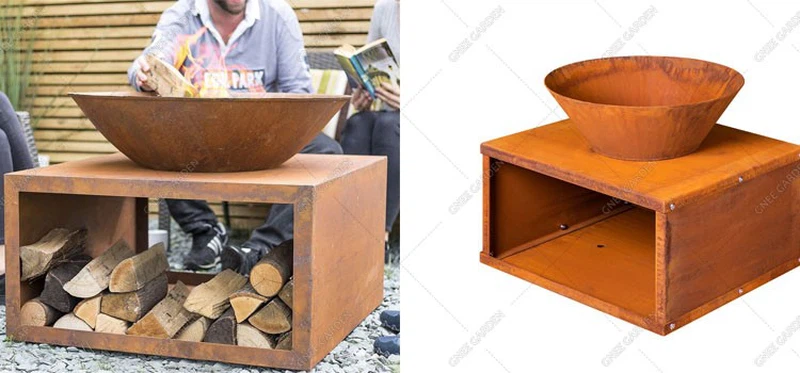
Use Natural Methods
There are many great suggestions for more natural methods of rust removal that don't rely on toxic chemicals.
Here are some of our favorite options that we've had the best results with in the past:
White Vinegar: vinegar is naturally acidic. So acidic, in fact, that it can dissolve rust. You can either pour the vinegar directly or use a cloth to wipe away the rust. It's important to clean these areas thoroughly afterward, as any residual vinegar may continue to corrode the metal.
Baking Soda: Baking soda has many uses and rust removal is another one to add. Mix baking soda with water to create a thick paste that sticks to the rusted areas. Leave the paste for a few hours and then rub it off with steel wool.
Wire Brush: A wire brush can physically remove surface rust. This method is very effective in removing rust from small, hard-to-reach areas.
Lemon Juice: Adding salt and lemon juice to the affected area can work wonders. Remember not to leave the lemon juice on for too long as it can also cause more damage if not rinsed properly.
Coke: Yes, Coke also has a high acidic pH because it contains a lot of phosphoric acid. It's actually a treat.
Potato: You may not believe it, but sprinkling a little salt on rust and rubbing it with a potato is also a great way to remove rust. It may seem strange to you, but the oxalic acid in potatoes dissolves rust very well!
Sandpaper Rust can also be removed by sanding the rust and exposing the metal underneath. This method works best for light rust and removes small areas.
Outdoor Fire Pit
