

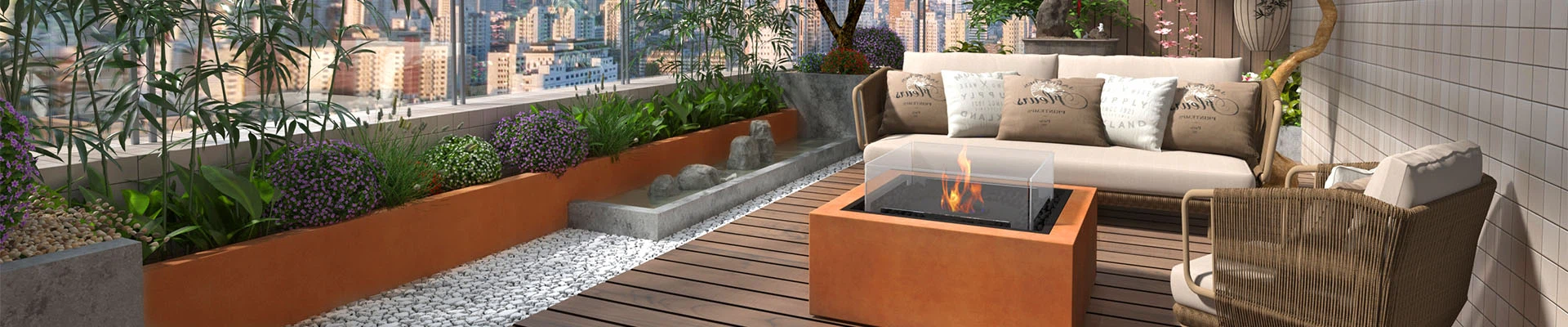


Corten facade cladding is a type of exterior layer that covers the outside of a building or home and offers protection, much like siding. In fact, many refer to cladding as siding and vice versa. Cladding panels perform both a functional and aesthetic purpose by protecting the structure from exterior elements, while also providing the desired finish for the building or residence. Cladding can be made of a wide range of materials, such as wood, metal, brick, and vinyl. Metal cladding, particularly cor-ten steel cladding, offers unique benefits.
Strength And Durability
Corten steel is known for its high durability and strength and can generally hold its own against any external exposures such as environmental factors. These can include air pollution, temperature, moisture, wind, and precipitation sunlight and ultraviolet rays. As the steel oxidizes it adds a layer of protection and this process increases its strength and durability meaning that as the material ages it actually gets stronger.
Aesthetic Properties And Contrasting
The unique, ever-changing, and evolving finish on corten steel is a direct result of the location of the building, the environmental conditions and where the panels are installed. This is why you are likely to see a difference in the patina-effect from one elevation on one side of the building to another. In addition, the natural warm, earthy tones that are synonymous with corten steel contrast particularly well with other cladding materials such as compressed fibre cement and solid aluminium cladding panels.
Corrosion Resistance And Longevity
As with strength and durability, the oxidization of the steel and the natural protective layer of rust that this creates provides a natural in-built corrosion resistance making corten steel superior to aluminium panels in terms of rigidity as well as impact resistance. An additional benefit over aluminium is that there is no risk of the material fatiguing over time especially in the folds.
Low Maintenance
The main appeal of corten steel is that it ages and wears naturally. Therefore, there is very little maintenance required as imperfections simply add to the aesthetic appeal and individual character of the façade.


Why Choose Us
Our Factory
Providing total solutions to our customers, we therefore specialize in customizing a wide range of metal products while offering standard products. From curtain walls, fire pits, water features, garden planters, fence panels, and privacy screens to gazebos.
One-stop Service
Since the company was founded, gnee has always adhered to the principle of a one-stop service system.It runs through the whole transaction process from pre-sale consultation, order confirmation, product design, production, and transportation to after-sale maintenance.
Production Advantage
With its factory and strict control over quality and efficiency, gnee garden company can offer a private, customized service that ensures clients receive a tailored solution to meet their requirements.
Professional Team
Our office environment is nearly 200 employees, a young, professional team. Continuously seeking new and new changes to make our products easy to use, convenient, and safe, because your choice makes us more motivated.
Corten sheet facade cladding is very adaptable, and it may be used on any kind of structure with any geometrical layout. A common use for this material is as a modular piece for cladding an exterior façade, where its oxidizing finish is constantly changing. In addition to the previously stated qualities of being self-protective against poor weather, this material is especially appealing to many designers. Corten steel cladding is one of the favorite metals for a variety of reasons.
Oxidation, protection and aesthetic quality
A typical oxidation process occurs when corten steel is exposed to the elements, resulting in the development of an outer coating that, with time, transforms into protective rust that precisely adheres to the base metal, rendering it impervious to the progression of corrosion. The beautiful paradox of weather-resistant steel is that the same thing that protects it against rust is that which protects it from rust. Aesthetically, the texture, patina, and rusting process give corten a deep burnt orange hue.
Colour transformation continues over time
Corten sheet metal is an attractive choice for architects, partly because of the constant transformation that rusted steel undergoes as a result of the passage of time, the quantity of sunshine received, and the age of the material. The colour of the corten coating may range from an orange-reddish finish in the early stage, about six months of installation, to a light brown to a deeper shade in the next few years, and finally to a purple-grey colour after a period of about twenty to forty years.
Sustainability - economic and environmental
Corten steel is a material known for its excellent durability and performance, as well as its ease of maintenance and the fact that it is fully recyclable.
The only type of maintenance needed is periodic exterior cleaning, which entails washing the surfaces and removing any polluting residues. Rain is capable of providing the required cleaning for exterior claddings, maintaining the coating durable and compact.
A retired corten sheet cladding may be recycled efficiently and cheaply after its life cycle, preserving its characteristics.
Working ease and versatility
Corten has comparable workability to regular steel. Thermal or mechanical cutting techniques equivalent to structural steels of the same thickness may be employed to cut the sheets or strips. They're simple to model and may be utilized for a variety of architectural components.
Corten is reasonably fast and simple to install in panel form. It needs minimal care since it rusts to create its protective coating. One of the reasons corten is often utilized on bridges that are difficult to reach is this. In reality, the corten sheets may be welded such that the deposited metal's tensile strength matches the compressive properties of the base metal. Whether planar, curved, or faceted, the cladding panels are worked, perforated, embossed, or printed with various motifs to produce complicated and straightforward geometries that meet the necessary functional and aesthetic criteria.
Corten steel is respected by architects for its strength and unique colour. Due to its chemical composition, this type of steel provides an oxidation that protects the piece without altering its mechanical properties.
Any architectural project can benefit from the architectural details of corten steel cladding detail because it presents a variety of situations and connections, not only as a constructive element, but also as a decorative element.
Corten steel facade detail cladding naturally changes appearance over time, and it is resistant to atmospheric agents, producing an extraordinary oxide finish that prevents corrosion. Rust, in fact, creates a surface coat that constantly regenerates and will allow the corten steel facade detail to “protect itself”, making it highly durable and low-maintenance.
Designers and planners can envision continuous surfaces that establish a visual dialogue with the surrounding environment while gradually changing their appearance over time, utilising the “formal language” typical of steel.
Corten steel, developed in 1933, has been used to build some of the most incredible structures in the world today.
Corten steel has a rusty, orange-brown appearance. In recent years, corten steel cladding detail has become increasingly popular in the garden as well as in the construction of buildings, bridges, and walls.


Iron, copper, phosphorus, silicon, nickel, and chromium make up corten steel. As the alloy rusts, oxygen cannot enter its inner layers. Compared to steel, corten steel is ten times more resistant to the sun, frost, and ice. In addition, it doesn’t need any extra maintenance, so it’s a great choice for cladding.
Conjoined joints will bond through surface rust, allowing for a variety of design styles. Steel’s ability to produce distinctive new forms makes it a favourite of sculptors. Corten’s ability to fuse can benefit even basic structures.
In architecture, cor-ten is used like a fabric, cut, folded, stretched, and decorated with inlays and processes that enhance its elastic qualities.
Cor-ten steel consists primarily of iron and carbon alloys, containing, in small amounts and less than 5% of the total metallurgical composition, copper, chromium, nickel, phosphorus, silicon, and manganese. Cor-ten is known for its strength and corrosion resistance.
Due to its structural composition and the particular distribution and concentration of alloy elements added to steel during production, this is all possible. As a result, carbon content is reduced, load capacity is increased, and corrosion resistance is enhanced.
Why do Buildings Need Exterior Cladding?
Exterior cladding plays a crucial role in the construction of commercial buildings, such as storage facilities, office buildings, shopping malls, and expo centers. It serves multiple purposes, making it an essential consideration for architects, real estate contractors, and business owners when choosing a cladding system for their projects.
One of the primary purposes of exterior cladding is to protect the building from external elements. It protects against harsh weather conditions, including rain, snow, wind, and uv radiation. By providing a protective layer, cladding prevents moisture from seeping into the building, which can lead to structural damage and mold growth.
In addition to protection, cladding also enhances the aesthetic appeal of the building. It offers an opportunity to create a visually striking facade, attracting customers and leaving a lasting impression. Cladding materials come in various colors, textures, and finishes, allowing architects to explore different design possibilities and create a unique look for each project.
Furthermore, exterior cladding contributes to the insulation of the building. It helps regulate the temperature inside by minimizing heat loss during winter and heat gain during summer. This improves energy efficiency and reduces heating and cooling costs in the long run.
When choosing a cladding system, architects and contractors must consider factors such as durability, maintenance requirements, cost-effectiveness, and environmental impact. Materials like porcelain, brick, stone, metal and fiber cement are commonly used for cladding due to their durability and versatility.
How to Maintenance Corten Facade Cladding
Regular cleaning
One of the major ways of maintaining your corten facade cladding is by cleaning it regularly. The ideal number of times you should clean your exterior wall cladding is two thorough times per year.
The ideal period is in the spring and in the fall, and you have to maintain these cleaning periods. The method of cleaning it is also essential. It is advisable that you use a mild detergent solution (warm water and detergent mixed) and a soft brush or sponge.
Address mould and mildew growth
If you live in a region where it rains a lot you may want to pay attention to moulds and mildew that may be growing in the wall cladding.
This is because moulds and mildew grow and thrive in damp environments. When you notice that they are growing, address them immediately and get rid of them. If you do not act promptly, then it will spread further and may cause both physical and health damage.
Inspect for damage
You can only notice possible cracks, warping, loose panels or any other damage when you constantly inspect your wall cladding. These damages can be caused by weather conditions or insects.
If during inspection you notice any minor issue, deal with them immediately to prevent them from escalating and causing bigger problems.
If you noticed it too late and the damage is already beyond your expertise, consult or hire a qualified professional familiar with your cladding panel type.
Re-sealing (if applicable)
If you use wood or fibre cement for your wall cladding, you can re-seal them to maintain their protective layer and prevent moisture absorption.
To know the correct method of re-sealing, it is advisable to consult the manufacturer for recommendations. Re-sealing should be done at specific intervals and those intervals should be maintained.
Gutter and drainage maintenance
You should also clean your gutters and downspouts regularly to prevent water (especially rainwater) from accumulating.
Allowing the water to accumulate can cause moisture damage to the cladding panels. Even if you try to air it out, once the water accumulates again, it destroys your effort to properly ventilate.
Vegetation control
If you have trees or a garden in your outdoor space or you still intend to have one of them, then ensure to keep them away from the cladding panels to prevent moisture retention, damage, and scratches.
If you have already made the mistake of planting them too close, then ensure to always trim the overhanging branches and keep the climbing plants away from the cladding panels.
Mind harsh weather
There are circumstances beyond your control that can contribute to the destruction of wall cladding. The most common one is harsh weather conditions, probably during a rainstorm or snowstorm.
When there is a strong storm, loose objects flying around or falling debris can hit the panel and damage it. It is necessary to put protective measures in place even if it is temporary.
Precautions of Corten Facade Cladding
Safety first when it comes to corten facade cladding
There are several health and safety concerns when it comes to corten facade cladding. Installation usually involves working at height and if the cladding isn’t installed correctly, it can come loose and break away from the building, causing pieces to fall off or water ingress that can lead to damp.
But the biggest concern is around corten facade cladding fire safety. Some materials, such as bricks, fibre cement or steel, have high fire resistance but others, such as timber, plywood or certain composite materials, have poor resistance.
Avoiding combustible cladding
The most noted of these is aluminium composite materials (acm) or acm panels (acp). Acm consists of thin aluminium sheets that sandwich a lightweight core, usually made from another metal, mineral compound, polyethylene or polyurethane. The cladding in place on grenfell tower was acm with a polyethylene core. The investigation into the fire concluded that the combustible cladding acted as a source of fuel and was the principal reason why the fire spread so fast up, down and around the building.
The public enquiry into the fire resulted in a nationwide project to identify high-rise buildings (greater than 18m tall) that contain acm cladding so that they can be tested for fire resistance. 456 buildings were identified as having unsafe, combustible acm cladding. The latest audit report by the national audit office in june 2020 recorded that of these 456 buildings, 149 had been fully remediated, 140 were still being worked on and 167 had seen no remedial action. The building safety programme, launched by the ministry of housing, communities and local government (mhclg) has banned combustible materials in new builds over 18m tall and is currently in consultation to reduce the limit to 11m. The current change regarding combustible cladding is now also part of the new building regulations.
Cladding fire safety with
Cladding should form a part of the fire safety assessment before any building is handed over, post-construction. By documenting the exact specifications of the cladding, its composition and its fire risk, building owners and operators can easily access important information. If regulations change in the future, if renovations are required or if the cladding needs to be recalled or replaced the documentation should be easily accessible and actionable.
Completing fire assessments is easy through the , using pre-existing templates that can be adjusted for your specific project needs. Attach documents, testing results, images and other information about cladding directly to the building blueprint. As-built documentation can be collated during construction, providing simpler handover and ensuring no element is missed.
FAQ
We're professional corten facade cladding manufacturers and suppliers in China, specialized in providing high quality customized service. We warmly welcome you to buy bulk corten facade cladding in stock here from our factory. For price consultation, contact us.
wall cladding sheet, Stainless Perforated Sheet, house cladding