


How Long Do Corten Steel Stairs Last? Lifespan and Maintenance
Jun 09, 2026
Leave a message

Corten steel stairs typically last between 30 and 60 years when installed outdoors in standard environmental conditions. If used indoors where they are shielded from weather elements, they can easily exceed a lifespan of 100+ years.
1. Understanding Corten Steel Stairs
Corten steel stairs are fabricated from weathering steel, typically ASTM A588 or ASTM A606 grades. Unlike ordinary carbon steel, weathering steel contains alloying elements such as copper, chromium, nickel, and phosphorus.
When exposed to outdoor weather conditions, the steel develops a dense protective oxide layer known as a patina.
This patina serves two important functions:
- Creates the characteristic warm rust-colored appearance
- Protects the underlying steel from ongoing corrosion
Unlike ordinary steel, which continues to rust until structural failure occurs, corten steel develops a stable protective layer that significantly slows further corrosion.

Corten Steel Stair Grille Steps

Corten Steel Garden Steps with Handrails

Outdoor Corten Steel Staircase
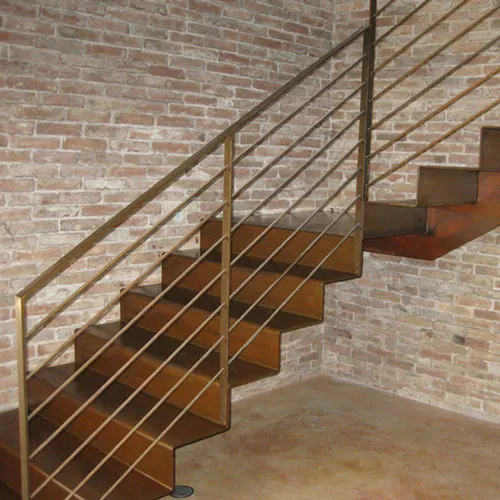
Modern Indoor Corten Steel Stairs
2. How Long Do Corten Steel Stairs Last?
The lifespan of corten steel stairs varies according to climate, exposure conditions, material thickness, and structural design.
| Application Environment | Expected Lifespan |
| Residential Gardens | 30–50+ Years |
| Commercial Landscapes | 30–50 Years |
| Public Parks & Walkways | 25–40 Years |
| Architectural Projects | 40–60+ Years |
In many applications, properly engineered corten steel stair systems can remain structurally sound for more than 50 years.
3. Why Does Corten Steel stairs Last So Long?
3.1. Self-Protecting Patina Layer
Unlike ordinary carbon steel, weathering steel contains alloying elements such as copper, chromium, nickel, and phosphorus. These elements influence the corrosion process and help create a dense oxide layer that adheres tightly to the steel surface.
During the weathering cycle:
- Rain, humidity, and oxygen react with the exposed steel surface.
- An initial rust layer develops during the first weeks of exposure.
- Repeated wet-and-dry cycles transform this layer into a compact protective patina.
- The patina reduces the penetration of oxygen, moisture, and airborne contaminants.
- Corrosion rates gradually decline as the protective layer stabilizes.
On corten steel, the patina acts as a barrier that slows further metal loss and protects the structural core.
In suitable environments, the long-term corrosion rate of weathering steel can be several times lower than that of untreated carbon steel, contributing to service lives that often exceed several decades.
3.2. No Paint System to Fail
Another major reason corten steel stairs achieve long service lives is that they do not depend on external protective coatings.
Traditional steel stair systems typically require paint, powder coating, or galvanization to resist corrosion. While these systems can provide effective protection, they are vulnerable to mechanical damage and natural aging.
Once a coating is damaged, moisture can reach the underlying steel and initiate localized corrosion. While Corten steel eliminates much of this maintenance burden because its corrosion resistance is built into the material itself rather than relying on an applied surface treatment. Even if the surface is scratched or abraded, a new protective patina can continue to develop naturally.
Factors That Affect Corten Steel Stair Lifespan
While weathering steel staircases are extremely durable, their exact lifespan depends heavily on specific conditions:
1. Environment: In dry inland climates, properly designed corten steel stairs may achieve service lives exceeding 60 years, with some weathering steel structures remaining in service significantly longer. In areas with prolonged high humidity or heavy rainfall, the lifespan of metal materials will be shortened because they are difficult to adapt to.
2. Wet-dry cycle: Corten steel staircase surfaces require alternating cycles of rain and sunlight to properly form and maintain their protective layer. Continuous dampness, such as water accumulation on the steps or damp debris, can damage the rust layer and cause the steel to completely corrode over time.
3. Salt content: In coastal or marine environments, high concentrations of atmospheric salt interfere with the chemical stability of the rust layer. While still usable, the salt accelerates oxidation, significantly shortening the overall lifespan unless thicker steel plates are used.
4. Steel thickness: The initial thickness of corten steel staircase steps determines their structural lifespan. For standard landscaping applications, standard 2.0 mm to 3.0 mm profiles can last for approximately 25 years or more.
Corten Steel stairs vs Other Stair Materials
| Material | Expected Lifespan | Maintenance Level |
| Corten Steel | 30–60+ Years | Very Low |
| Timber | 10–20 Years | High |
| Concrete | 20–40 Years | Medium |
| Galvanized Steel | 20–40 Years | Medium |
Key Maintenance Practices
One of the greatest advantages of corten steel stair steps is their minimal maintenance needs.
After the protective patina has stabilized, maintenance generally includes:
1. Periodic Inspection
Check for:
Blocked drainage
Debris accumulation
Structural damage
Loose connections
Surface Cleaning
2. Occasionally remove:
Leaves
Soil buildup
Organic debris
This helps maintain proper airflow and drainage around the structure.
3. Avoid Trapped Moisture
Areas that remain permanently wet should be monitored.
Examples include:
Soil contact zones
Planter interfaces
Poorly drained corners
Frequently Asked Questions
Q1: Do corten steel stairs require painting?
A: No. Corten steel is designed to weather naturally and does not require painting to achieve corrosion resistance.
Q2: How long does the patina take to form?
A: Typical weathering stages:
- Initial oxidation: 2–8 weeks
- Visible weathered appearance: 3–6 months
- Stable protective patina: 12–36 months
- Climate conditions can affect the timeline.
Q3: Will corten steel stain nearby paving?
A: During the early weathering period, rust-colored runoff may stain adjacent concrete or stone surfaces. Proper drainage design helps minimize this effect.
Q4: Are corten steel stairs suitable for commercial projects?
A: Yes. They are widely used in hotels, resorts, public parks, commercial landscapes.
Conclusion
Corten steel stairs offer a unique combination of long-term durability, architectural appeal, and low maintenance. In most outdoor applications, properly designed and installed weathering steel stair systems can provide service lives exceeding 30 to 60 years while requiring only minimal upkeep.
About Us
Gneegarden is a professional manufacturer and supplier of custom Corten steel landscape products, serving residential, commercial, and architectural projects worldwide. Our product range includes corten steel stairs, garden steps, wall cladding panels, screens, fire pits, and outdoor architectural features.
