


Are Corten Steel Stairs Safe? Slip Resistance and Surface Finishes
Jun 09, 2026
Leave a message

Corten steel stairs have become increasingly popular in residential landscapes, commercial developments, public parks, and architectural projects due to their distinctive weathered appearance and exceptional durability.
However, one question frequently raised by homeowners, architects, and contractors is: Are corten steel stairs safe to walk on, especially when wet?
The answer depends on tread design. Smooth corten steel can be slippery when wet, but serrated, grating and perforated treads provide good grip Like any stair material, safety depends not only on the material itself but also on tread design, surface finish, drainage, and installation quality.
1. Are Corten Steel Stairs Slippery?
Generally, corten steel stairs are slippery. Like most stair materials, the smooth surface of corten steel steps loses friction when wet or exposed to rain. However, this doesn't mean weathering steel stairs are unsafe. Modern corten stair systems incorporate anti-slip designs, significantly improving grip and walking comfort.
In reality, stair safety depends more on tread design, surface texture, drainage, and maintenance than on the steel itself. Therefore, architects and manufacturers often choose textured, perforated, serrated, or grid-like treads for outdoor stairs.
Why Slip Resistance Matters for Outdoor Stairs
Outdoor staircases are frequently exposed to rain, snow, ice, fallen leaves, dust, and debris. These conditions reduce the surface friction of corten steel stair treads, increasing the risk of slipping and falling.
For projects such as parks, hotels and resorts, educational parks, and residential gardens, slip-resistant staircase design is often a critical safety requirement.
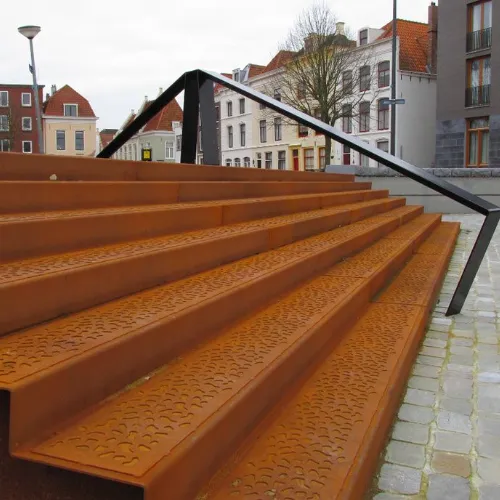
corten steel steps


2. Most Common Anti-Slip Finishes for Corten Steel Stairs

1. Serrated Stair Treads
Corten steel serrated treads are among the most effective anti-slip solutions.
The surface contains raised teeth that improve shoe grip and help shed water, dirt, and snow.
Benefits include:
Excellent wet-weather performance
Suitable for public projects
Minimal maintenance
Long service life
2. Grating Stair Treads
Corten steel grating stairs feature an open-grid design that allows water and debris to pass through.
Advantages include:
Outstanding drainage
Reduced ice accumulation
High slip resistance
Suitable for snowy climates where drainage matters
Corten grating treads are widely used in outdoor corten steel staircases installed on slopes, trails, and elevated walkways.
- Related product: Corten Steel Stair Grille Steps

3. Perforated Treads
Perforated corten steel stair treads combine aesthetics with functionality. Small openings improve traction while maintaining a modern architectural appearance.
Benefits include:
Contemporary design
Improved drainage
Reduced water accumulation
Suitable for residential and commercial projects
3. Corten Steel vs Other Stair Materials: Slip Resistance Comparison
| Material | Dry Conditions | Wet Conditions | Maintenance |
| Corten Steel (Smooth) | Good | Moderate | Low |
| Corten Steel (Serrated) | Excellent | Excellent | Low |
| Timber | Good | Moderate | High |
| Concrete | Good | Good | Medium |
| Natural Stone | Good | Moderate | Medium |
| Stainless Steel | Good | Poor | Low |
Properly designed corten steel stairs often outperform smooth stainless steel surfaces in outdoor environments.
- NOTE: Qualitative comparison for planning purposes; test data available on request
4. How to Improve the Slip Resistance of Corten Steel steps
Proper Drainage
Good drainage helps keep outdoor corten stairs safer by reducing standing water. Simple features such as drainage gaps, open treads, and slight slopes allow water to drain away quickly and help prevent slippery surfaces.
Consistent Step Dimensions
Uniform tread depth and riser height improve user safety and reduce trip hazards. This is particularly important for public and commercial projects.
Handrails and Guardrails
Handrails and guardrails significantly improve stair safety. Handrails and guardrails provide additional support and stability for users when ascending or descending stairs.
Adequate Lighting
For evening use, integrated lighting helps users identify stair edges and walking surfaces. This is especially important in gardens, parks, and hospitality projects.
Slip-resistance checklist for buyers
- Tread type: serrated, grating or perforated for outdoor stairs, with smooth treads limited to sheltered positions.
- Drainage: open treads or small drainage gaps so water does not pool on the surface.
- Dimensions: consistent tread depth and riser height across the whole staircase, which reduces trip hazards.
- Handrails: on both sides for public, commercial and multi-generational use.
- Lighting: integrated or path lighting along the edges for evening use.
- Maintenance: clear leaves, debris and snow regularly, and check fixings and treads for loosening.
Conclusion
Corten steel stairs are a safe and reliable solution for outdoor and indoor applications when properly designed. While smooth steel surfaces may become slippery under certain conditions, modern stair systems incorporate serrated treads, grating panels, perforated surfaces that significantly improve traction.
About Us
Gnee Garden is a professional manufacturer and supplier of custom Corten steel landscape products, serving residential, commercial, and architectural projects worldwide. Our product range includes corten steel stairs, garden steps, wall cladding panels, screens, fire pits, and outdoor architectural features.

FAQ
Q1: Are corten steel stairs safe for outdoor use?
A: Yes, when the tread is designed for wet conditions. Serrated, grating and perforated treads provide good grip. Smooth treads can be slippery when wet and are best limited to sheltered areas.
Q2: Which tread type is best for a public park or hotel entrance?
A: Serrated treads and grating are the most common choices for high-traffic outdoor use because they offer strong grip and shed water and debris. Perforated treads suit residential and design-led projects.
Q3: Do corten steel stairs stain the ground when new?
A: Rust-colored runoff can stain nearby surfaces during the first year. Keep stairs away from light paving where possible, or plan a drainage line to direct runoff.
Q4: Do corten steel stairs need handrails?
A: For public, commercial and multi-generational use, handrails on both sides are recommended. They improve stability and reduce the risk of falls, especially on wet or sloped sites.
Q5: Can corten stairs be used in snowy climates?
A: Grating treads are well suited to snowy and icy conditions because they drain water and reduce ice buildup. Confirm the design with the supplier for your local climate.