Wood Burning Fire Pit Vs Gas Fire Pit: Which Is Better?
Nov 16, 2026
Leave a message
Choosing between a wood burning fire pit and a gas fire pit depends on how you plan to use your outdoor space. Both options create a warm focal point for gardens, patios and outdoor entertaining areas, but they differ in fuel, operation, maintenance and installation.
A wood burning fire pit offers the traditional experience of real logs, crackling flames and glowing embers. A gas fire pit provides more convenient ignition, adjustable flames and less cleanup.
So, which is better? This guide compares wood burning vs gas fire pits to help homeowners, landscape designers, contractors and outdoor living product buyers make an informed decision.
Quick Answer: Wood Burning or Gas Fire Pit?
Choose a wood burning fire pit if you prefer a traditional open fire, natural crackling sounds, glowing embers and the flexibility to use firewood without a permanent gas connection.
Choose a gas fire pit if you prioritize easy operation, adjustable flames, less ash and smoke, and convenient on-and-off control.
For commercial outdoor projects, the decision should also consider local fire regulations, installation requirements, fuel availability and long-term maintenance.
Wood Burning Fire Pit vs Gas Fire Pit: Key Differences
| Comparison | Wood Burning Fire Pit | Gas Fire Pit |
|---|---|---|
| Fuel | Firewood or specified solid fuel | Propane (LPG) or natural gas |
| Ignition | Manual lighting | Manual valve, switch or electronic ignition |
| Flame | Natural, changing flames | More consistent and adjustable flames |
| Smoke | Produces wood smoke | No wood smoke during normal gas operation |
| Sparks and Embers | Can produce sparks and hot embers | No wood embers from the burner |
| Heat Experience | Radiant heat and glowing coals | Controlled heat from a gas burner |
| Cleanup | Ash and leftover charcoal | Usually minimal |
| Installation | Usually simpler for portable models | May require a gas supply and professional installation |
| Maintenance | Ash removal and fire bowl cleaning | Burner, gas connection and ignition inspection |
| Best For | Traditional outdoor fires and wood-fired ambiance | Convenient outdoor entertaining and controlled flames |
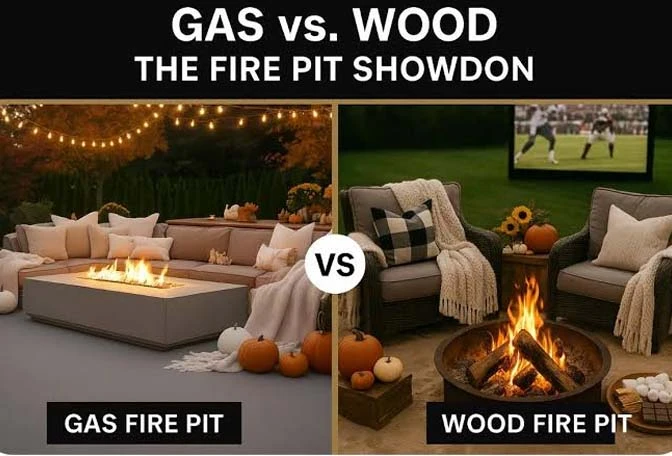
1. corten Wood Burning Fire Pit: Pros and Cons
A corten wood burning fire pit uses logs or other approved solid fuel to create an open fire. It is popular in gardens, patios, campsites and outdoor gathering areas.
Advantages of corten Wood Burning Fire Pits
- Traditional Fire Experience: Wood burning fire pits create natural flames, crackling sounds and glowing embers.
- No Permanent Gas Connection: Many freestanding wood fire pits can be installed without connecting to a gas supply.
- Suitable for Outdoor Cooking: Depending on the design, a wood burning fire pit can be used with a compatible cooking grate or grill accessory.
- Flexible Design Options: Wood burning fire pits are available in bowls, raised fire pits, square designs and custom metal structures.
Disadvantages of Wood Burning Fire Pits
- Produces smoke, sparks and embers.
- Requires firewood storage and regular refueling.
- Ash and residue need to be removed after use.
- Fire intensity is less convenient to control than a gas burner.
- May be restricted by local burn bans or air-quality regulations.
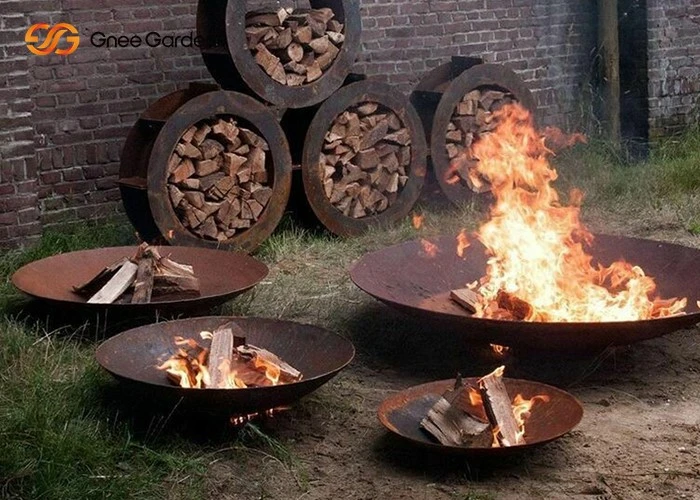
2. Gas Fire Pit: Pros and Cons
A gas fire pit uses propane or natural gas to produce a controlled flame. It is commonly used in modern patios, outdoor kitchens, hotels, restaurants and landscape design projects.
Advantages of Gas Fire Pits
Convenient Operation: Gas fire pits can usually be started and stopped with a valve, switch or ignition system, depending on the model.
Adjustable Flame: Many gas burner systems allow users to adjust flame height.
Less Cleanup: Gas fire pits do not produce wood ash or leftover logs.
Reduced Smoke and Sparks: Gas combustion does not create wood smoke or flying wood embers under normal operating conditions.
Disadvantages of Gas Fire Pits
- Gas burner systems may have a higher initial purchase and installation cost.
- Natural gas models require a suitable gas connection.
- Propane models need a compatible gas cylinder and regular refilling.
- Gas components require inspection and maintenance.
- Installation must follow the manufacturer's requirements and applicable fuel-gas regulations.
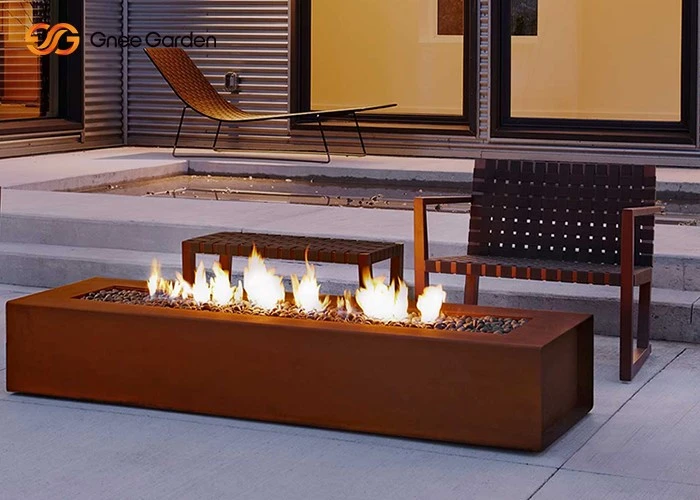
3. Propane vs Natural Gas Fire Pits
Gas fire pits generally use one of two fuel sources: propane (LPG) or natural gas.
| Factor | Propane Fire Pit | Natural Gas Fire Pit |
|---|---|---|
| Fuel Supply | Gas cylinder or tank | Permanent gas line |
| Portability | More flexible, depending on design | Usually fixed in position |
| Refueling | Cylinder replacement or refill | Continuous supply through gas line |
| Installation | Depends on appliance and cylinder arrangement | Requires professional gas-line installation |
| Best For | Patios and locations without a gas connection | Permanent outdoor living spaces |
Propane and natural gas systems are not automatically interchangeable. The burner, regulator, orifices and connections must be designed or approved for the specified gas type.
4. Which Fire Pit Produces More Heat?
The heating performance of a fire pit depends on its fuel consumption, burner or firebox design, size, airflow and operating conditions.
A wood fire can produce substantial radiant heat, particularly when burning properly seasoned hardwood. Its heat output can vary as the firewood burns and the ember bed develops.
A gas fire pit provides a more controlled flame. Its heat output is generally specified by the burner rating, often expressed in BTU/h or kW.
When comparing models, check the rated heat output rather than choosing only by fuel type.
5. Which Fire Pit Is Easier to Maintain?
Wood burning fire pits need regular removal of ash and debris. The fire bowl should be checked for accumulated moisture, corrosion and damage after use.
Gas fire pits generally require less daily cleanup, but the burner, ignition system, gas connections and ventilation openings must be inspected according to the manufacturer's instructions.
For both types, use a suitable cover when the fire pit is not in use and make sure water can drain from the structure.
6. Which Fire Pit Is Better for Your Outdoor Space?
Choose a Wood Burning Fire Pit If You:
- Enjoy traditional wood fires and natural flames.
- Want the option of outdoor cooking with compatible accessories.
- Prefer a portable or freestanding design without a permanent gas line.
- Are able to manage smoke, ash and firewood storage.
Choose a Gas Fire Pit If You:
- Prefer convenient ignition and flame adjustment.
- Want less ash and routine cleanup.
- Are planning a permanent patio or outdoor kitchen installation.
- Have access to a suitable propane or natural gas supply.
For hotels, restaurants and landscape projects, consider the frequency of use, local regulations, installation access and maintenance arrangements before selecting the fuel type.
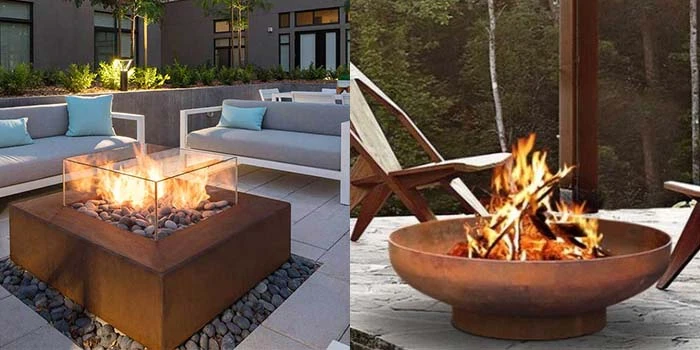
7. What Should Buyers Check Before Ordering?
- Fuel Type: Wood, propane or natural gas.
- Dimensions: Overall size, fire bowl diameter and height.
- Material: Corten steel, carbon steel, stainless steel or another specified material.
- Burner or Firebox: Confirm the design is suitable for the selected fuel.
- Accessories: Spark screen, cooking grate, burner media, cover or other compatible accessories.
- Surface Finish: Natural weathered finish, painted finish or other available treatment.
- Installation: Required clearances, ventilation, gas connection and base preparation.
- Packaging: Protection suitable for export transportation.
- Customization: Drawings, logo, dimensions and project-specific requirements.
- Contact us for a custom quote!
Frequently Asked Questions
Q: Is a corten wood burning fire pit better than a gas fire pit?
Neither is universally better. Wood burning models offer a traditional fire experience and can be suitable for outdoor cooking. Gas models provide convenient operation, adjustable flames and less ash cleanup.
Q: Are gas fire pits smoke-free?
Gas fire pits do not produce wood smoke during normal operation. However, they still involve combustion and must be installed and operated according to the manufacturer's instructions.
Q: Can a wood burning fire pit be converted to gas?
Not every wood burning fire pit can be converted. Conversion is only appropriate when the manufacturer provides or approves a compatible gas burner system and the structure meets the relevant installation requirements.
Q: Can you cook on a gas fire pit?
Some gas fire pits are designed for cooking, but many are intended for decorative flames and outdoor ambiance only. Always check whether the model is specifically approved for cooking.
Q: Which is better for a commercial outdoor project?
Gas fire pits may be suitable for projects prioritizing convenience and controlled operation, while wood burning models may be preferred where a traditional fire experience is important. Local regulations, installation conditions and maintenance requirements should guide the decision.
Explore Outdoor Fire Pit Options from Gnee Garden
Gnee Garden supplies outdoor fire pit products for garden retailers, landscape contractors, distributors and project buyers.
Our product range includes Corten steel fire pits and other outdoor fire features. Custom dimensions, material options, surface finishes and project requirements can be discussed according to the product design.
If you are sourcing outdoor fire pits for a wholesale order or landscaping project, send us your preferred fuel type, dimensions, quantity and destination country.