

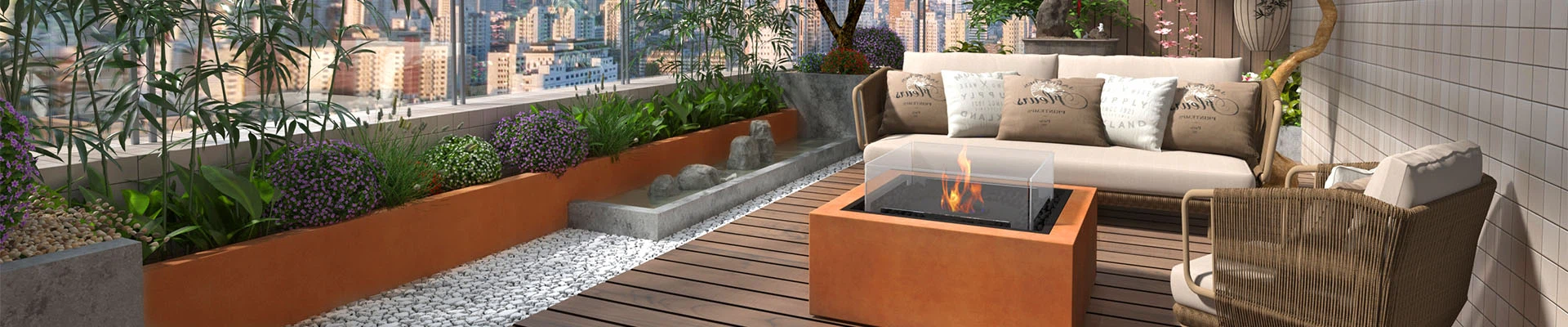

Curtain Wall Facade
Description
Technical Parameters
Gnee (Tianjin) Multinational Trading Co. Ltd. is a professional manufacturer of weatherproof steel gardening products. Providing total solutions to our customers, we therefore specialize in customizing a wide range of metal products while offering standard products. From curtain walls, fire pits, water features, garden planters, fence panels, and privacy screens to gazebos, we even have a range of outdoor barbecue products.
Founded in 2016 with a registered capital of 5 million RMB, we have more than 36,000 square meters of factory space and 800 square meters of office environment and have completed more than 80 landscape projects with more than 100 companies around the world. The self-designed Corten Stabilized Rust Technology solves the environmental pollution problem and has been recognized by dozens of projects.
Why choose us?
Production advantage
With its factory and strict control over quality and efficiency, Gnee Garden Company can offer a private, customized service that ensures clients receive a tailored solution to meet their requirements.
Professional team
Our office environment is nearly 200 employees, a young, professional team. Continuously seeking new and new changes to make our products easy to use, convenient, and safe, because your choice makes us more motivated.
One-stop service
Since the company was founded, Gnee has always adhered to the principle of a one-stop service system. It runs through the whole transaction process from pre-sale consultation, order confirmation, product design, production, and transportation to after-sale maintenance.
Rich experience
Founded in 2016 with a registered capital of 5 million RMB, we have more than 36,000 square meters of factory space and 800 square meters of office environment and have completed more than 80 landscape projects with more than 100 companies around the world.

Stainless Steel Perforated Sheet
Perforated sheet metal is environmentally friendly and the scrap metal produced can also be collected, recycled and formed into new sheet metal.

Perforated Stainless Steel Sheet Price
Perforated metals are used in many applications due to their durability, ductility, and ease of installation and maintenance. Sheet metal improves architectural design by providing buildings with expanded design and functional elements.

Perforated Stainless Steel Sheet Metal
Perforated Stainless Steel is a highly durable product that is easy to install and maintain Specializing in customers seeking a high-performance solution, Perforated Stainless Steel offers a variety of types of perforated needs.

Perforated Stainless Steel is a high-quality product designed for customers seeking a high-performance solution for all types of perforation needs.

Aluminum Decoration Wall Panel
Aluminum panels play an important role as a new material in the modern building materials industry. Aluminum panels are mostly used in the interior and exterior wall decoration of buildings.

Interior And Exterior Wall Cladding Panels
Aluminum Cladding Panels are extremely durable and can withstand a variety of environmental stresses. It can resist many of the common problems that plague other materials, such as rot, termites, and mold.

Decorative Outdoor Metal Panels
Aluminum is known for its strength and resilience, making it an excellent choice for cladding. It can withstand harsh weather conditions including heavy rain, strong winds and extreme temperatures without losing its structural integrity.

Aluminum façades are an integral part of every building, not only is it the facade that the building presents to the world, but it also makes a statement about the building inside and out.

Aluminum building facades are strong, durable and highly resistant to corrosion. Compared to alternative framing materials such as steel, aluminum products are lighter, more cost-effective and thermally more efficient than the competition.
Unlike other building materials, a curtain wall system is thin and lightweight, usually aluminum and glass. These walls are not structural, and by design, they are only able to carry their own weight, while transferring the load of wind and gravity to the structure of the building. The design makes it air and water resistant, to ensure that the interior of the building remains airtight.
Keeping out air and water
Curtain walls have the primary purpose of keeping air and water out of the building, essentially acting as both a buffer and an insulator. Buildings that have curtain walls will be easier (and more affordable) to maintain, and will last longer in general, as they have this additional protective shield build in.
Reducing building sway
A curtain wall isn't intended to provide for structural stability, but it does reduce the sway of the building overall, thereby making the structure more secure. The curtain wall is able to even out any stress on the building, by dispersing kinetic force throughout the entire frame and structure. Overall, this creates a building that is more likely to withstand high winds. A reduction in building sway is especially useful in taller buildings and can also make the building more comfortable to inhabitants.
Slowing the spread of fire
Curtain walls are additionally able to slow the spread of fire between floors, by acting as a barrier and preventing the fire from easily transferring across the surface of the building. This can be especially important in taller buildings, where the fire would otherwise quickly be able to spread upwards.
Thermal efficiency
When properly treated and glazed, curtain walls also vastly improve the thermal efficiency of a building. As another layer of material across the building, curtain walls are able to stabilize the temperature within and cut down on the operating costs of the building itself. Additional glazing can reduce UV light, which will keep items within the building from fading or degrading quickly.
Appearance and attractiveness
Curtain walls are expected of many buildings today, not only because of their numerous practical advantages but also because of their appearance. A curtain wall gives a clean, sophisticated, and unique appearance, which is now associated with contemporary design. In many areas, curtain walls are the only type of wall that would be seen against the city skyline.
Types of Curtain Wall Facade
Stick-built curtain wall system
The stick-built curtain wall system is one of the traditional methods of constructing curtain walls. It involves assembling the system piece by piece on-site. In order to achieve greater customization, each frame member, glass panel, and other component is installed separately. The design flexibility of this system makes it ideal for low- to medium-rise buildings.
Spandrel panel curtain wall systems
Spandrel panels are non-load bearing, vertical panels used between floors or roofs to conceal mechanical equipment, columns, and other structural elements. They are typically made of metal, wood, or composite materials and are designed to match adjacent facades in terms of color and texture. Spandrel panels are used in curtain wall systems to cover the areas between the floors of a building. These panels not only serve an aesthetic purpose by creating a smooth exterior but also provide insulation and fire protection. Spandrel panels can be made from various materials, including glass, metal, stone, or terracotta, allowing architects to play with colors and textures.
Structural glazed curtain wall systems
Structural glazed curtain wall systems are known for their minimalistic and sleek appearance. In these systems, the glass is directly structurally bonded to the frame, eliminating the need for visible framing elements. This design creates a seamless, all-glass facade that maximizes natural light and provides unobstructed views. Structural glazed systems are often used in contemporary and high-end architectural projects.
Unitized curtain wall system
The unitized curtain wall system is a popular choice for high-rise buildings. It involves pre-fabricating large units or panels in a controlled factory environment. These units are then transported to the construction site and assembled into complete curtain wall system. The unitized system offers faster installation, improved quality control, and reduced on-site labor.
Spider glass curtain wall system
The spider glass curtain wall system is known for its unique and visually striking appearance. It features point-fixed glass panels connected by metal spider fittings, creating a minimalistic and transparent façade. This system is often used in contemporary and modern architectural designs.
Point-supported glass curtain wall system
The point-supported glass curtain wall system is similar to the spider glass system, but it uses discreet point-supported connections instead of spider fittings. These connections are typically made of stainless steel or aluminum, and they offer a sleek and minimalist aesthetic. This system is often used in large-scale commercial and institutional buildings.
Double-skin curtain wall systems
Double-Skin Curtain Wall systems offer enhanced thermal performance and energy efficiency. HalsInternational's Double-Skin system creates a ventilated air cavity between the inner and outer layers, acting as insulation and reducing heat gain. This technology is particularly effective in regions with extreme climates, providing a comfortable interior environment while minimizing energy consumption.
Application of Curtain Wall Facade
Commercial buildings
Curtain walls are frequently used in commercial skyscrapers, office complexes, and shopping centres to create a modern and visually appealing façade.
Cultural and recreational buildings
Museums, theatres, and sports arenas benefit from curtain walls to create unique architectural statements and enhance visitor experiences.
Educational institutions
Schools and universities use curtain walls to create well-lit and inviting learning environments.
Healthcare facilities
Curtain walls are employed in healthcare settings to promote natural light and a comfortable atmosphere.
Hospitality industry
Luxury hotels and resorts utilize curtain walls to offer panoramic views and elegant ambiance.
Residential buildings
High-end residential buildings often feature curtain walls to provide unobstructed views, natural light, and a sense of spaciousness.
How to Install Curtain Wall Facade
Establish control lines
Find out from the contractor exactly where the stick wall should go. Bench marks may be painted on the floor and over the edge of the floors. They must be visible on all floors before, during and after the construction of the curtain wall to be used by all the trades. Bench marks are used as reference points for measuring the location of most everything on each floor.
Layout
The layout determines the exact wall placement by the use of offset lines and finished floor levels developed from the control lines established earlier. This procedure should be checked and double-checked by more than one person. The curtain wall must be one continuous plane up and around the building. Each floor must have the proper amount of room for attaching anchors. Even though the floors are not perfectly level or plumb, the wall must be.
Anchor plates
One of the most important parts of the building's construction is the placement and the type of anchors used. Anchor plates are bolted, welded or cast into the structure of the building. The type of anchors used depends on the type of wall design, the building design and the load considerations of the wall.
Most steel beam construction has the anchors bolted or welded on to the structural beams. In concrete construction impediments or weld plates are cast into the concrete floor. This allows the anchors to be welded or bolted to a steel anchor, instead of being separately anchored into the concrete at each location.
The location of the anchors must be precise. The "make it work" theory does not prevail in this type of construction. Do not use a hand full of washers to make a bolt fit or attach an anchor extender because the anchor was in the wrong location. Forcing anchors causes poor quality and weakness in the buildings and curtain wall construction.
Check materials
The materials should arrive on site during the process. Make arrangements with the contractor prior to their arrival for storage locations or for the materials to be hoisted to the proper floors as they arrive. Most metal components should be positioned on the proper floor as they are unloaded from the trucks. Due to the weight of the glass units they should be positioned next to the columns as they are to be installed. Proper positioning of the materials will help cut down on continued handling and loss due to damage.
Erect mullions
The verticals usually are the first item to be installed. These must be positioned plumb and accurately. The verticals usually are about 20 feet to 25 feet and joined by stacking one on top of the other. Splice sleeves are used to join the mullions. The mullions are semiplumbed and placed on a plane, and the anchors are fastened but not tightened. Once the mullions are perfectly plumb and on the same plane, the bolts are tightened all the way. The next mullion is installed on top of the previous one and so on.
Install horizontals
After all the vertical mullions are in place and secured, install the horizontals. Use the manufacturer's installation instructions because horizontals can be anchored one of many ways: by clips, screw spline or brackets. The wall could also have certain areas that must be sealed now. Be sure to follow the proper procedures for this step. Once the wall is built, it is difficult to correct a mistake.
Seal the corners
Where a wall meets a jamb or corner, pre-packaged flashing and sealing units usually are supplied by the manufacturer and should be used or followed. If the system develops a leak and you did not follow the manufacturer's instructions, your company will probably be liable for the damages and the responsibility of fixing the problem.
Glaze the wall
The curtain wall can be glazed using different techniques. The wall could be designed for outside glazing or inside glazing. The framing members could accommodate 1⁄4-inch glass and spandrels to 1-inch insulating glass units or laminated glass products. Generally, these types use a pressure type system. In this system, the glazing retainers and caps must be removed from the outside of the building. The use of scaffolding or suspended scaffolding is necessary to install glass in these situations.
Trim
Once the system has been completed, the exterior glazing caps and final sealants should be applied and installed. The interior usually only requires the installation of drywall caps and retainers.
Regular inspection and maintenance
Routine inspections are important as they can reveal hidden problems with the curtain wall facade. Maintenance staff should visually inspect the façade regularly, paying close attention to any issues with gaskets, seals, and connections. Any cracks or other structural issues must be addressed immediately to prevent further damage to the facade.
Cleaning and washing
Over time, dirt and dust can accumulate on a glass curtain wall. Regular cleaning is necessary to maintain the appearance and visual charm. Cleaning can also prevent corrosion and extend the facade's lifespan.
Sealant inspection and replacement
The quality of the sealant is key to prevent water infiltration in curtain wall facades. Thermal efficiency is maintained only if water does not seep in due to compromised sealant. Therefore, it's important to periodically check the sealant and replace any that shows signs of wear or damage. Properly functioning sealants ensure the structural integrity of curtain walls remains uncompromised.
Repairing and sealing joints
The joints between curtain wall facades are highly susceptible to air and water penetration. Inspecting these joints can reveal any trapped air or water. It's important to promptly repair any damage in these sections to avoid major issues.
Managing thermal expansion
As temperatures fluctuate, a curtain wall may experience slight movements. It is important to monitor thermal breaks and expansion joints to ensure they are functioning properly. This helps in maintaining the structural integrity and performance of the curtain wall system.
Certifications

Our Factory
Founded in 2016 with a registered capital of 5 million RMB, we have more than 36,000 square meters of factory space and 800 square meters of office environment and have completed more than 80 landscape projects with more than 100 companies around the world. The self-designed Corten Stabilized Rust Technology solves the environmental pollution problem and has been recognized by dozens of projects.

FAQ
Hot Tags: curtain wall facade, China curtain wall facade manufacturers, suppliers, factory, stainless Metal Wall Panel Systems, New rectangle long fire pit, Corten Steel Corrugated Roofing, camping corten steel fire pit, Corten Steel Pergola With Roof, Corten Steel Urban Furniture
Previous
External CladdingNext
Aluminum Facade WallSend Inquiry


